
If you’re deciding between a “super clone” and a “replica” watch, it usually comes down to three things: how close the watch looks (and what it’s made of), the movement and overall finishing, and the price versus long‑term maintainability. This guide stays focused on the technical and market side rather than legal or ethical discussion. All pricing and “version” notes are based on a snapshot as of 24 Feb 2026 and may shift by batch and seller.
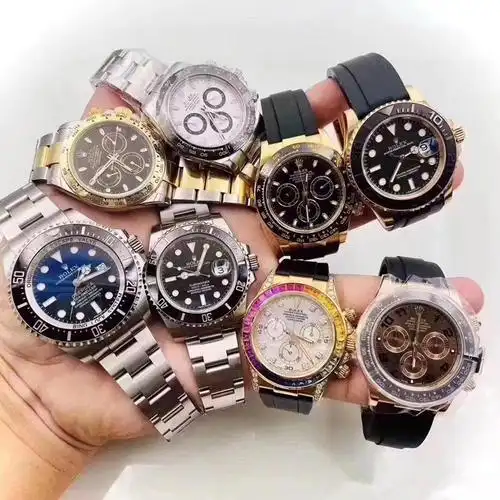
TL;DR: If your top priority is “it should look right, and even with the caseback opened it shouldn’t be obvious”, you’ll typically lean towards a super clone (top‑tier replica). If you care more about “stable timekeeping, easier servicing, and better value”, a replica using a common or modified movement is usually the more practical choice—especially on a tighter budget.
Super clone vs replica watches: a quick comparison
The table below compares two categories of non-genuine watches across the points most readers care about. Prices are market-observation ranges only, provided for decision-making context (based on the publication date).
| Dimension | Super clone (top-tier replica) | Replica (broad mid-to-high tier) |
|---|---|---|
| Typical price range (24 Feb 2026) | ~¥2,000–¥6,000+ (complications can be higher) | ~¥800–¥3,000 |
| Visual accuracy (dial text, hands, lume) | Usually higher; sharper details and better alignment | Generally good, but differences show up more under macro shots |
| Materials & construction | More often higher-spec parts (e.g. ceramic bezel, sapphire crystal; some batches claim 904L) | 316L steel is more common; aluminium bezel inserts and sapphire/mineral crystals are also common |
| Movement type & “clone” layout | “Integrated” or highly simulated layouts are common; looks closer to the genuine calibre | Common/modified movements are more common (e.g. NH35, 8215, ST2130 family) |
| Expected timekeeping stability | Depends heavily on regulation and batch; long-term samples are mixed | Mature, common movements often land in a “daily-wear friendly” stability band |
| Identifiability with the caseback opened | Usually lower (harder to tell); solid casebacks have an advantage | Usually higher (easier to tell); display backs and common movements give clearer tells |
| Serviceability & parts availability | Parts/docs are relatively scarce; higher servicing threshold | More service-friendly; parts and tutorials are easier to find |
| Water resistance & sealing | Batch-dependent; get a separate pressure test | Same; treat as “splash/shallow water” unless pressure-tested |
| Best for | Highest visual standards; collecting/handling | Daily wear; tool-watch mindset; budget value |
| Evidence & batch sensitivity | More sensitive to batch/factory; version tracking matters | Batch variance exists, but information tends to be more transparent |
Note: This article does not point to any specific seller or “factory”. For the technical baseline on materials and movements, the sources below can be used for cross-checking.
Visual accuracy and materials
Visual accuracy decides whether the watch “reads right” at a glance; materials shape how it feels on the wrist and how it holds up over time. Super clones are more likely to be closer on dial print crispness, engraving depth, hand proportions, marker alignment, and the colour/behaviour of the lume. Replicas can still look convincing at normal viewing distance, but macro photos more often reveal rough edges, ink build-up, or uneven lume.
A practical way to check:
- Start with bezel/indices alignment, then look at the hand-length proportions.
- Take one lume photo in low light and see whether the colour temperature and fade look even.
- Run a fingertip along case edges and transitions to feel whether brushing and bevels are clean.
On materials: genuine models often highlight “Oystersteel” (a grade in the 904L family). Official descriptions emphasise high corrosion resistance and a lasting polish, positioning it as a high-performance stainless steel. You can use Rolex’s official Watchmaking – Materials page and the Oystersteel page as a baseline reference.
- Based on Outokumpu engineering datasheets, 904L contains higher Ni/Mo/Cu, which improves pitting and crevice corrosion resistance (PREN roughly 36–40), while 316L is more general-purpose and lower-cost (PREN roughly 22–26). See Outokumpu’s 904L and 316L datasheets and its Corrosion Handbook.
- For crystals, Edmund Optics notes sapphire’s Knoop hardness at roughly 1900–2200 HK (Mohs ≈ 9), while common optical glass such as N‑BK7 is around 610 HK (Mohs ≈ 6), so scratch resistance is meaningfully lower.
So in day-to-day terms: super clones more often pair higher visual accuracy with higher-spec materials (e.g. ceramic bezels, sapphire crystals, and some batches claiming 904L), but the truth depends on the specific batch and teardown evidence. Replicas more often use 316L with sapphire/mineral combinations; they can be perfectly wearable, but weight, lustre, and long-term corrosion resistance may differ. Think of 904L as “steel that copes better with salty, humid environments”, and sapphire as “a clear cover that’s hard to scratch with keys”.
Authoritative baseline links:
- Rolex official materials info (2025–2026): Rolex Watchmaking – Materials; Rolex Oystersteel
- Engineering data (2026): Outokumpu 904L Data Sheet; Outokumpu 316L Data Sheet; Outokumpu Corrosion Handbook
- Crystal materials (2026): Edmund Optics – Sapphire optics; SCHOTT N‑BK7 datasheet
Movement and timekeeping: realism, stability, and serviceability
The movement determines function, timekeeping stability, and how easy it is to tell the watch apart once the caseback is opened. Super clones more often use “integrated” movements or highly simulated layouts (bridge shapes and engravings look closer to genuine calibres), and solid casebacks tend to reduce identifiability further. The trade-off is that long-term stability, servicing difficulty, and parts availability can vary a lot by batch—user reports are mixed.
Replicas more often use common or modified movements such as the SII NH35A, Miyota 8215, or Seagull ST2130/2824 families. The upside is straightforward: broader servicing coverage, more tutorials, and easier parts sourcing.
For a reference “threshold”, you can use published timing standards and maker specs:
- Timing standard: COSC’s chronometer standard uses an average daily rate of -4/+6 s/day as a public, high-level regulation baseline (within the ISO 3159 framework).
- Common-movement examples:
- The SII NH35A specification lists -20 to +40 s/day, 21,600 bph, and about 41 hours of power reserve.
- The Miyota 8215 product page lists -20 to +40 s/day and around 42 hours of power reserve.
- For Seagull ST2130/2824 figures, rely on official or clearly verifiable sources; without a solid link, it’s better not to make hard numerical comparisons.
Put simply: if your priority is “even opened up, it should still look convincing”, super clones usually win on movement aesthetics. If you care more about “stable daily timekeeping plus easier ownership”, the ecosystem around common movements can save you a lot of hassle. Does that mean super clones are always unstable? Not necessarily—but they’re typically more sensitive to batch, regulation quality, and seller QC, so you’ll want to pay closer attention to version notes and credible evidence.
For timegrapher methods and interpretation, Witschi’s manuals (see the Witschi downloads page) are a useful reference.
Finishing/QC, water resistance, and “tell” signs with the caseback opened
- Finishing & QC: Super clones often look stronger on CNC edge crispness, brushing/polish transitions, and dial printing—but they can still swing by batch. Replicas cover a wider range, and QC consistency can vary more by seller. When you’re assessing a watch, prioritise macro real-world photos (alignment and edge finishing), not just promotional images.
- Water resistance: Batch variance is significant for both categories. Treat “50–100 m” claims cautiously; if you plan to expose the watch to water, get a proper pressure test first. For day-to-day use, a conservative “splashes/hand washing/rain” mindset tends to be safer.
- What to look for after opening the case (for learning/checking):
- Bridge shapes and engraving fonts versus the genuine calibre
- Balance and shock system architecture (e.g. KIF/Paraflex-style visual differences)
- Screw positions, head/slot types, and finishing style
- Plate finishing patterns (perlage/Geneva stripes: density and direction)
- Rotor shape, engraving depth, and plating quality
- Calendar-setting structure and feel (quickset logic/steps)
These points are intended for educational inspection and do not encourage any attempt to mislead others.
How to choose by use case and budget
- If your top priority is “highest visual accuracy and a movement that also looks convincing”, and your budget is around ¥3,000–6,000+: you’ll usually lean towards a super clone/top-tier replica. Solid casebacks often help; check batch/version notes and look for macro and open-case evidence.
- If you care more about “stable timekeeping and easy servicing”, with a budget around ¥1,500–3,000: a replica with a common movement is typically the friendlier choice. Prefer movement families with abundant parts and guides (e.g. NH35A, Miyota 8215).
- If your budget is under ¥1,500 but you still want respectable finishing: look at mid-range replicas (316L + common movement). Give up a few “perfect” details to gain easier ownership and better value.
- If you have a “low-risk, easy-to-verify, easier-to-resell” mindset: favour categories and sellers with more transparent information and movements that aren’t a black box; pay attention to return/exchange and after-sales terms.
A simple rule: set your scenario and budget first, then define a minimum “pass mark” for each dimension—trying to maximise everything at once is how costs and risks climb fast.
FAQ
- Does a super clone always use 904L steel?
- Not as an absolute rule. Genuine brands describe the 904L-family baseline and benefits clearly (see the Oystersteel references above), but on the replica side you need batch-specific teardown evidence—claims aren’t the same as measured results.
- What’s the core difference between an “integrated” clone-style movement and a common/modified movement?
- Integrated clone-style movements aim for very close visual layout and functionality, making them harder to spot with the caseback opened; common/modified movements prioritise stability, serviceability, and a mature parts ecosystem, with movement aesthetics usually being the trade-off.
- How much does a solid caseback vs a display caseback affect identifiability?
- Solid casebacks generally reduce identifiability because you see less of the movement. Display backs make it easier to observe structure and finishing differences.
- Can you swim with the stated water resistance on a replica?
- Treat stated ratings conservatively. Get a proper pressure test before swimming; in many cases, managing expectations as “splashes/shallow water” is safer.
- Under ¥1,500, how do you balance looks and durability?
- Accept that you won’t max out visual accuracy. Prioritise a 316L case, a common movement, and ideally a sapphire crystal; then focus on bracelet solidity and clasp finishing.
References (2024–2026):
- Genuine materials baseline: Rolex Watchmaking – Materials; Rolex Oystersteel
- Engineering data (904L vs 316L): Outokumpu 904L Data Sheet; Outokumpu 316L Data Sheet; Outokumpu Corrosion Handbook
- Crystal hardness: Edmund Optics – Sapphire optics; SCHOTT – N‑BK7 datasheet
- Timing standards and movement specs: COSC – Chronometer standards; SII NH35A specification; Miyota 8215 product page
Note: Links point to authoritative or original sources. Figures and parameters are subject to the cited pages and access dates; batch and seller variation can be significant, so apply judgement to real-world samples.